North Texas storms bring 70+ mph straight-line winds. Here's what a wind-rated garage door actually is, how to check your current door's rating, and when an upgrade makes sense for Rockwall and DFW homeowners.
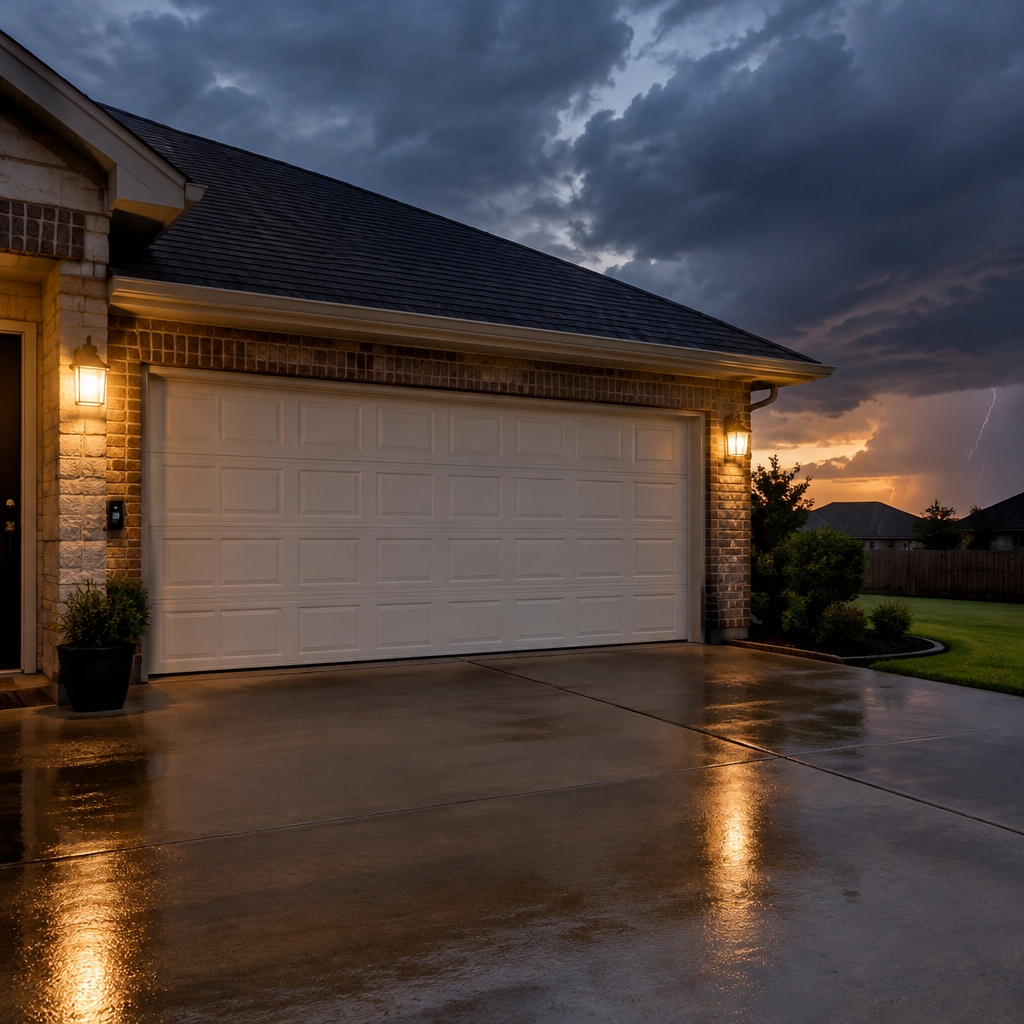
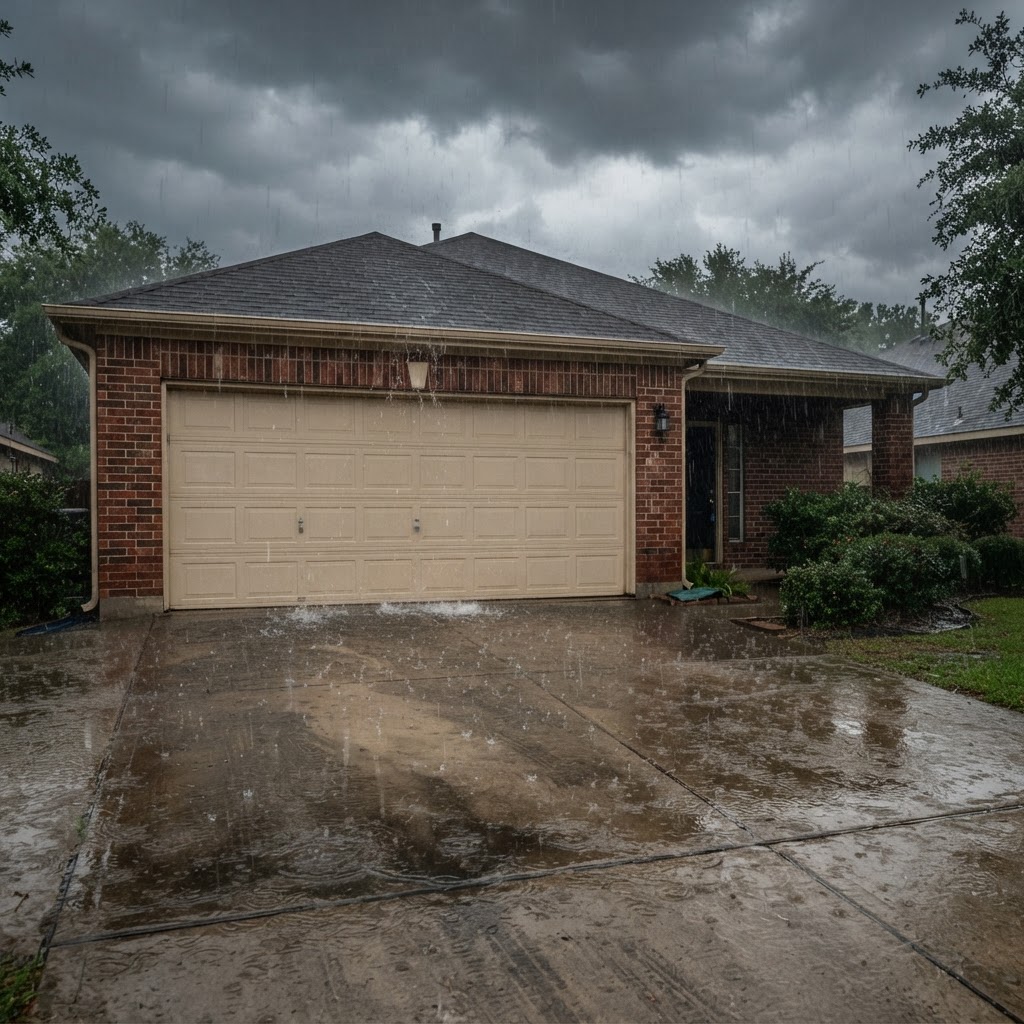
If you have lived in Rockwall or anywhere around DFW for more than a few years, you have seen what a severe thunderstorm can do. Straight-line winds clocked at 70 to 90 mph have torn through North Texas neighborhoods more than once, peeling back garage doors like tin can lids. Heavy storms also bring rain intrusion — see our fixes for water leaking under your garage door. The garage door is the single largest opening on most homes, and when it fails, the wind doesn't just damage the door — it pressurizes the garage and can lift roof sections above it. That is exactly the problem wind-rated garage doors are built to solve.
What a wind-rated garage door actually is
A wind-rated door (sometimes called a wind-loaded or storm-rated door) is engineered to resist a specific wind pressure instead of simply swinging up and down on a track. It looks much like a standard door from the curb, but inside there is real structure:
- Heavier-gauge steel or reinforced skins that resist flexing and bowing under pressure
- Internal vertical stiffeners and reinforced stiles that spread the wind load across each section
- Stronger track and hardware, with thicker brackets and more mounting points into the wall framing
- Windlock mechanisms on some designs, which keep the door seated in its track even if it deflects under a gust
The door works together with the frame. A proper wind-rated installation also anchors the track to the wall correctly, because a reinforced door mounted to weak framing still fails.
How wind ratings are measured
Doors are rated two ways you will see on labels and spec sheets. First is design pressure (DP), measured in pounds per square foot. Second is the wind speed the door was tested to withstand. When you see something like a DP +50 or a 115 mph rating, that door has been cycle-tested under positive and negative pressure, meaning both the push of the wind and the suction of air pulling back out as the gust passes.
Do a quick self-check
Wondering what your current door is rated? Look for a sticker inside the door — usually on the edge of a section or the interior skin near the bottom. Most modern doors show a DP rating, test standard, and manufacturer. No sticker at all on a 15- or 20-year-old builder-grade door usually tells you what you need to know: it was built for shade, not storms.
Does North Texas really get damaging winds?
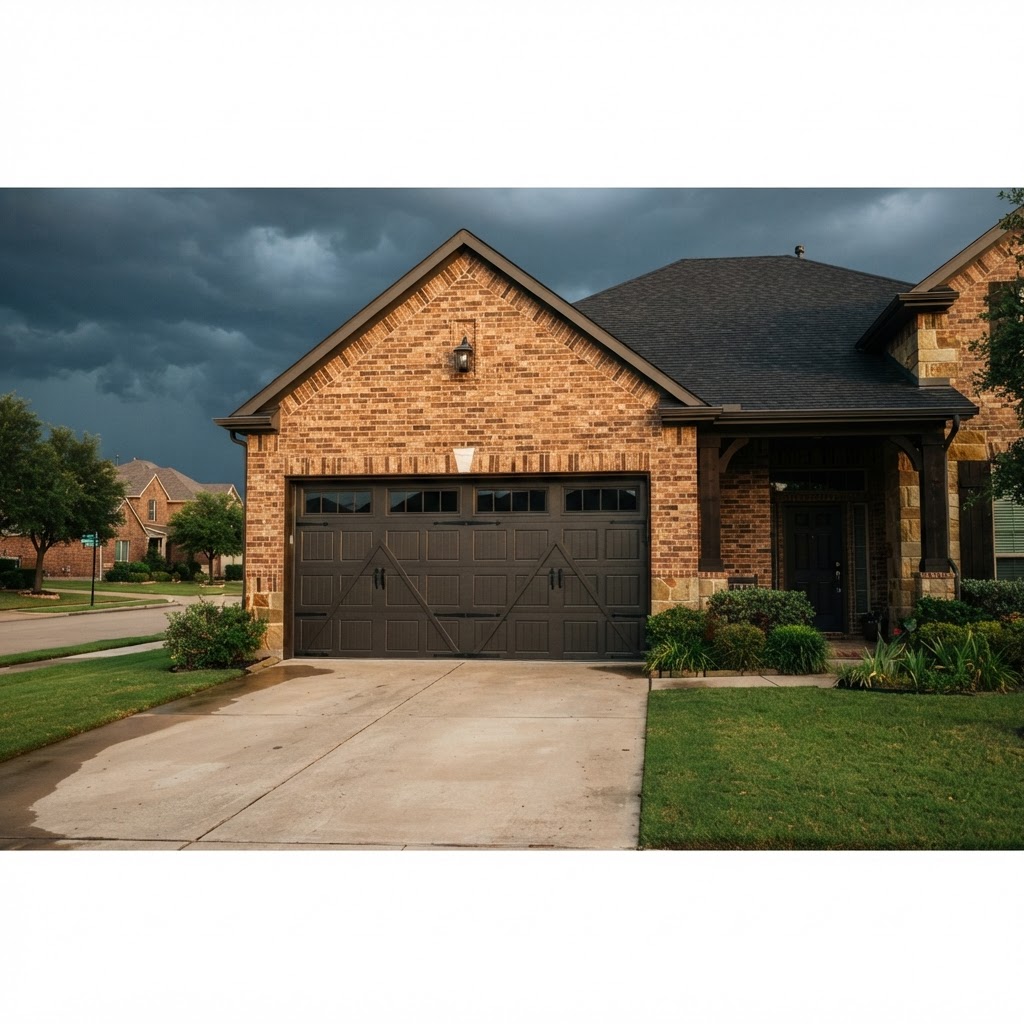
Yes — it is not just a coastal problem. While Rockwall County sits well inland from the coast, North Texas is a national hotspot for severe thunderstorm winds. Almost every spring and summer, somewhere in DFW gets a 60-to-90 mph gust event, and derechos occasionally sweep wider swaths of the metro area. Unlike a hurricane, these events arrive fast, often with little warning beyond a severe thunderstorm warning on your phone.
Most home insurers in Texas do not require a wind-rated door the way coastal counties do, so nobody is going to force your hand. (For broader weather prep, see our guide on hail and storm damage protection for Texas homes.) But if your door is aging anyway, it is worth understanding the upgrade exists before the next warned storm rolls through rather than after.
Wind-rated vs. standard doors: what actually differs
- Tracking and mounting: wind-rated doors use heavier track with added support, which keeps the door in the opening under load.
- Internal reinforcement: vertical stiffeners behind each panel absorb flex so sections don't crumple inward.
- Cycle testing: rated doors are tested under both pressure and suction, which is what a real gust actually does to a door.
- Insulated core options: many wind-rated doors pair well with insulated construction, so you gain energy efficiency for Texas summers too.
What a wind-rated door costs in the DFW area
Expect a meaningful step up from a basic builder-grade door. A standard single-layer steel double door might run modest money installed, while a wind-rated double door typically adds a premium for the reinforced construction, with total installed cost depending on size, insulation, windows, and design. The honest way to think about it: you are not paying for a fancier door, you are paying for structure that stands between a 90 mph gust and your roof. Prices move with material costs, so get a current in-home quote rather than shopping from old forum numbers.
When upgrading makes the most sense
- Your current door is 15+ years old and the springs, sections, or hardware are already aging out
- A past storm tweaked your door — bends, cracked sections, or a door that now shudders in ordinary gusts
- Your garage sits broadside to open exposure, facing a field, a greenbelt, or a lake with nothing to slow the wind down
- You are already replacing the door for style or insulation reasons — the incremental cost is smallest at replacement time
- There's a finished room above the garage, where a door failure can translate directly into roof and interior damage
The bottom line for Rockwall homeowners
Most DFW homeowners will never have a door fail in a storm. But when one does, the repair bill rarely stops at the door — the roof line above the garage often pays for it too. If your door is due for replacement anyway, ask for wind-loaded options — many of which also feature insulated garage doors for year-round energy savings — and the incremental protection is hard to argue with. If your door is newer and unrated, the practical middle step is a professional inspection to confirm the track is properly anchored and the door is structurally sound.
Have your door inspected or get a wind-rated replacement quote — we help homeowners across Rockwall, Heath, and the wider DFW area pick doors that fit both their homes and our weather.
Servicing Rockwall, Heath, Fate, Royse City, Rowlett, Terrell, Forney, Mesquite, Garland and the greater Dallas–Fort Worth area.
Need Garage Door Service in Rockwall, TX & DFW Metroplex?
Same-day repair, fair pricing, and 24/7 emergency dispatch. Call the experts at Adams Superior.